
Sales of oil & gas
oil & gas products
Over the years of work at the energy market AAM Westgeest BV has won the reputation of a reliable petroleum product supplier. The Company sells its products in large and small bulk to more than 24 countries.
CONSUMER DELIGHT
We produce and distribute a wide range of high-quality petroleum and gas products.
We Export Blend Crude Oil, also known as Urals oil, is a medium gravity sour crude. It is a mix of heavy oil from the Urals and the Volga region with light oil of Western Siberia.
CRUDE OIL – SPECIFICATIONS:
| Component | Unit | Max Limit |
|---|---|---|
| Density at 20 °C | kg/m³ | 0.870 |
| Sulphur Content | % | 1.8 |
| Paraffin Content | % | 1.8 |
| Water and Sediment | % | 1.2 |
| Ash Content | % | 0.05 |
| Chloride Content | mg/L | 100 |
| Distillation Fractions | ||
| – Up to 200 °C | % volume | 21 |
| – Up to 300 °C | % volume | 41 |
| – Up to 350 °C | % volume | 50 |
| API Gravity @ 20 °C | Degrees (API) | 32.00 |
| Salts Content | mg/L | 100.00 |
RUSSIAN EXPORT BLEND
| Component | Unit | Specification |
|---|---|---|
| Density at 20 °C | kg/m³ | Max 0.8695 |
| Viscosity at 80 °C | mm²/s (cSt) | Not more than 16.0 |
| Flash Point (Closed Crucible) | °C | Not more than +35 °C |
| Saturated Vapour Pressure at 3 °C | kPa / mm Hg | 7 / 50 |
| Pour Point (Melting Temperature) | °C | -49 |
| Paraffin Content (by mass) | % | 3.1 – 6.07 |
| Sulphur Content | % | Max 1.8 |
| Conradson Carbon Residue (Coking) | % | 2.06 |
| Nitrogen Content | % | Max 0.25 |
| Naphthenic Acid (Chamois-Acid Resins) | % | Max 0.90 |
| Asphaltene Content | % | Max 0.90 |
| Ash Content | % | Max 0.004 |
| Distillation Fractions | ||
| – Up to 200 °C (by volume) | % | 21.0 – 27.2 |
- Straight run gasoline (naphtha);
- Diesel fuel of Euro-5 standard (DT-L-K5);
- Gas condensate distillates;
- Coke;
- LPG;
- Granulated sulphur.
After the commissioning of the combined high octane gasoline reforming unit the range of products will be extended with high octane gasolines of Euro-5 standard A-92 and A-95.

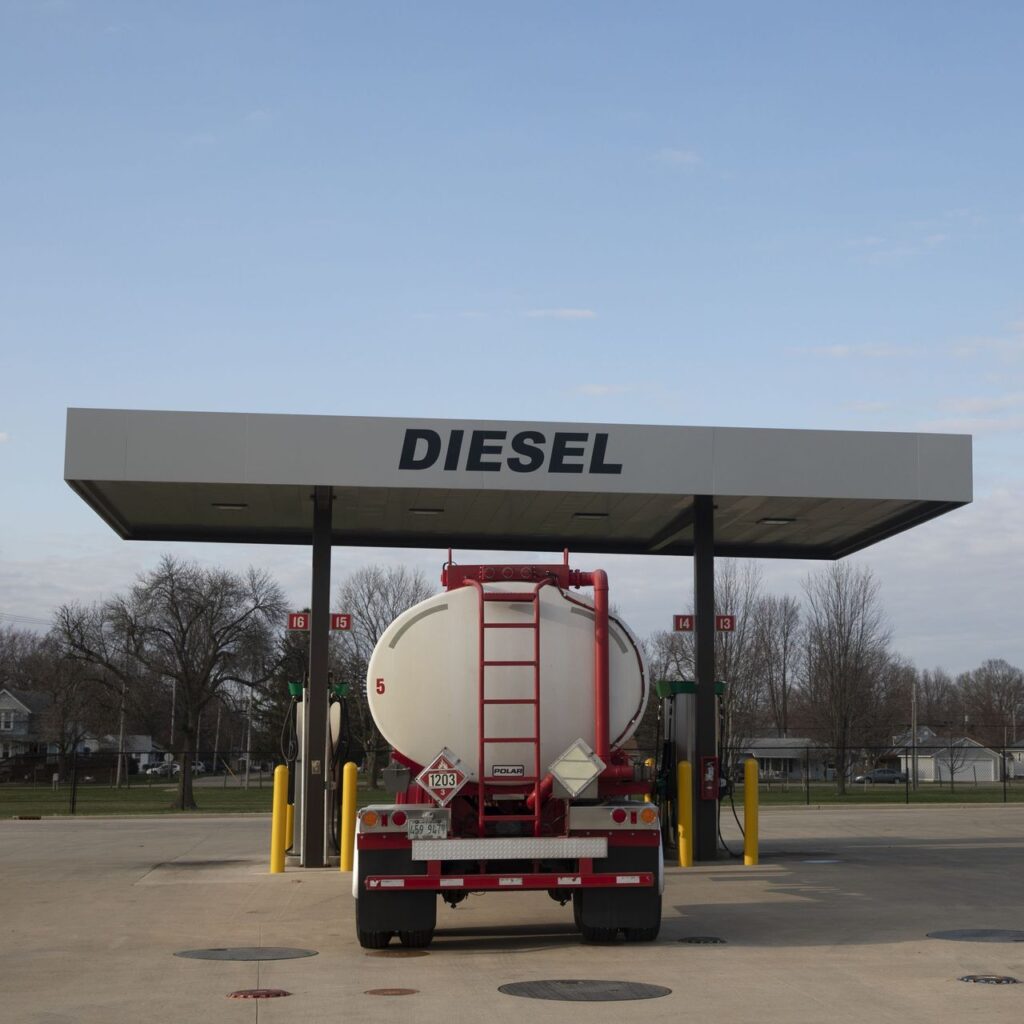
DIESEL D2 GASOIL L-0.2-62 GOST 305-82 (D2)
Standard diesel fuel (sometimes called diesel oil) comes in two grades: Diesel-1 (D1) and Diesel-2 (D2). Diesel or Diesel fuel in general is any fuel used in diesel engines. Thats why its also commonly called as AGO or Automotive Gas Oil. Diesel fuel is a type of fuel derived from the distillation of oil that is heavier than gasoline but lighter than engine oil and heavy oil.
D1 is similar to kerosene and is lighter than D2. While D2 is sold most of the time, D1 is sold during winter in very cold climates and not sold in hot weather countries. But D2 is easily available in most countries around the world. Despite rising awareness of environmental protection, D2 remains to be a key type of fuel for use in vehicles in many countries.
In particular, demand for D2 has risen significantly in Asia over the past years as a consequence of increasing number of cars. In view of the country sustained economic growth, D2 will continue to be undersupply in the China/India and market.
Gasoil D2 (Gost 305-82) SPECIFICATIONS:
| Component | Unit | Min | Max |
|---|---|---|---|
| Density @ 20 °C | kg/m³ | — | 0.870 |
| Colour | — | 1.0 | 2.0 |
| Flash Point, PMCC | °C | 57 | 66 |
| Kinematic Viscosity @ 20 °C | cSt | 3.0 | 6.0 |
| Pour Point (PP)* | °C | — | 10.0 |
| Cloud Point (CP)* | °C | — | 5.0 |
| Mercaptan Sulphur | % wt | — | 0.01 |
| Acidity | mg/1000 cm³ | — | 5.0 |
| Iodine Number | g/100g | — | 6.0 |
| Ash Content | % wt | — | 0.01 |
| Total Sulphur | % wt | 0.01 | 0.02 |
| Copper Corrosion (3 hrs @ 50 °C, Typical) | Class | — | 1A |
| CCR (Carbon Residue) on 10% Residue | % wt | — | 0.20 |
| Cetane Index | — | 45 | — |
| Distillation Range | |||
| – 50% Recovered Volume | °C | — | 280 |
| – 90% Recovered Volume | °C | — | 350 |
| Bacterial Content | |||
| – Bacteria MBC | Fibre/litre | — | 500 |
| – Bacteria CFU | Fibre/litre | — | 1000 |
WHAT IS DIESEL EN590
EN590 describes the physical properties that all automotive diesel fuel must meet if it is to be sold in the European Union and Britain. Automotive diesel has national variants but the usual variants traded are EN590 and EN560 which are specified by ISO in Paris.
EN590 for diesel (in Europe) has been around for almost 20 years. However fuel, like most products, is subject to a process of continuous development – and that development includes responding to legislation. The EN590 standard has been amended many times since 1993.
The EN 590 had been introduced along with the European emission standards. With each of its revisions the EN 590 had been adapted to lower the sulphur content of diesel fuel. Since 2007 this is called ultra low sulphur diesel as the former function of sulphur as a lubricant is absent (and needs to be replaced by additives).
The quality of European diesel fuels is specified by the EN 590 standard. While these specifications not are mandatory, they are observed by all fuel suppliers in Europe. Automobile diesel EN 590 is intended for application in diesel engines. Diesel motor fuel quality meets the requirements of European Standard EN 590.
For operation in the conditions of a temperate climate following marks of fuel diesel automobile EN 590 are offered: Grade C – limiting filterability temperature -5 ℃; Grade D – limiting filterability temperature -10 ℃; Grade E – limiting filterability temperature – 15 ℃; Grade F – limiting filterability temperature -20 ℃.
The entire volume of produced diesel fuel quality meets the requirements for fuels for vehicles of Euro 4 and Euro 5. Low sulfur content in diesel EN 590 reduces emissions of sulfur oxides into the atmosphere, which is especially important for for inhabitants of big cities.
Some of the important revisions of the EN 590 standard have been:
EN 590:1993 – the first EU diesel fuel specification. It established a sulphur limit of 0.2% in on-road and non-road diesel fuels.
EN 590:1999 – this standard reflected the sulphur (350ppm) and cetane (51) specifications by Directive 98/70/EC.
EN 590:2004 – Sulphur limits of 50ppm (Euro 4) and 10ppm (Euro 5) as regulated by Directive 2003/17/EC. FAME (Fatty Acid Methyl Ester) content of 5% (B5)
EN 590:2009 – FAME content of 7% (B7) as regulated by Directive 2009/30/EC. This directive also adopts mandatory biofuel requirements for refiners and introduces a 10ppm sulphur limit in non-road fuels effective 2011.
Gasoil D2 (Gost 305-82) SPECIFICATIONS:
Table 1
| Fuel Property | Unit | Specification | Test Method |
|---|---|---|---|
| Cetane Number | — | Min 49 | ISO 5165 |
| Cetane Index | — | Min 46 | ISO 4264 |
| Density @ 15 °C | kg/m³ | 820 – 860 | ISO 3675 / ASTM D4052 |
| Sulfur Content | % (wt.) | Max 0.20 | EN 24260 / ISO 8754 |
| Flash Point | °C | Min 55 | ISO 2719 |
| Carbon Residue (10% Bottoms) | % (wt.) | Max 0.30 | ISO 10370 |
| Ash Content | % (wt.) | Max 0.01 | EN 26245 |
| Water Content | mg/kg | Max 200 | ASTM D1744 |
Table 1
| Fuel Property | Unit | Specification | Test Method |
|---|---|---|---|
| Copper Strip Corrosion (3h @ 50 °C) | Class | Max 1 | ISO 2160 |
| Oxidation Stability | g/m³ | Max 25 | ASTM D2274 (Corrected from D2247) |
| Viscosity @ 40 °C | mm²/s | 2.00 – 4.50 | ISO 3104 |
| Distillation (vol. % recovered) | ISO 3405 | ||
| – 10% Recovery Point | °C | Report | ISO 3405 |
| – 50% Recovery Point | °C | Report | ISO 3405 |
| – 65% Recovery Point | °C | Max 250 | ISO 3405 |
| – 85% Recovery Point | °C | Max 350 | ISO 3405 |
| – 95% Recovery Point | °C | Max 370 | ISO 3405 |
WHAT IS ULTRA LAW SULPHER DIESEL (ULSD) ?
Ultra Low Sulfur Diesel (ULSD) is diesel fuel with substantially lowered sulfur content. As of 2006, almost all of the petroleum-based diesel fuel available in Europe and North America is of a ULSD type. There is not a single standard set of specifications and as the government mandated standard becomes progressively more strict so does the definition.
The move to lower sulfur content is expected to allow the application of newer emissions control technologies that should substantially lower emissions of particulate matter from diesel engines. This change occurred first in the European Union and is now happening in North America. New emissions standards, dependent on the cleaner fuel, have been in effect for automobiles in the United States since model year 2007.
ULSD has a lower energy content due to the heavy processing required to remove large amounts of sulfur from oil, leading to lower fuel economy. Using it requires more costly oil.
DIESEL FUEL OIL D6
D6 is also be known as Residual Fuel Oil and is of high-viscosity. This particular fuel oil requires preheating to 220 – 260 Degrees Fahrenheit. D6 is mostly used for generators.
D6 is a type of residual fuel, mainly used in power plants and larger ships. The fuel requires to be preheated before it can be used. It is not possible to use it in smaller engines or vessels/vehicles where it is not possible to pre-heat it. D6 is its name in the USA. In other parts of the world it has other names.
Residual means the material remaining after the more valuable cuts of crude oil have boiled off. The residue may contain various undesirable impurities including 2 percent water and one-half percent mineral soil. D6 fuel is also known as residual fuel oil (RFO), by the Navy specification of Bunker C, or by the Pacific Specification of PS-400.
Recent changes in fuel quality regulation now require further refining of the D6 in order to remove the sulfur, which leads to a higher cost. Despite this recent change, D6 is still less useful because of its viscosity as well as that it needs to be pre-heated before it can be used and contains high amounts of pollutants, such as sulfur. Since it requires pre-heating, it cannot be used in small ships or boats or cars. However large ships and power plants can use the residual fuel oil.
The price of D6 diesel traditionally rises during colder months as demand for heating oil rises, which is refined in much the same way. In many parts of the United States and throughout the United Kingdom and Australia, d6 diesel may be priced higher than petrol.
D6 Diesel Standards and Classification:-
CCAI and CII are two indexes which describe the ignition quality of residual fuel oil, and CCAI is especially often calculated for marine fuels.
Despite this marine fuels are still quoted on the international bunker markets with their maximum viscosity (which is set by the ISO 8217 standard – see below) due to the fact that marine engines are designed to use different viscosities of fuel.
The unit of viscosity used is the Centistoke and the d6 fuel most frequently quoted are listed below in order of cost, the least expensive first-
* IFO 380 – Intermediate d6 fuel oil with a maximum viscosity of 380 Centistokes.
* IFO 180 – Intermediate d6 fuel oil with a maximum viscosity of 180 Centistokes.
* LS 380 – Low-sulphur (<1.5%) intermediate d6 fuel oil with a maximum viscosity of 380 Centistokes.
* LS 180 – Low-sulphur (<1.5%) intermediate d6 fuel oil with a maximum viscosity of 180 Centistokes.
* MDO – Marine diesel oil.
* MGO – Marine gasoil.
WHAT IS ULTRA LAW SULPHER DIESEL (ULSD) ?
Mazut is a heavy, low quality fuel oil, used in generating plants and similar applications. In the Western Europe, mazut is blended or broken down with the end product being diesel. Mazut-100 is a fuel oil that is manufactured to GOST specifications, for example GOST 10585-75 or 99.
Only Mazut M100: The Mazut M100 is supplied according to the technical specification GOST, section for fuel oil, mazut sort 100. This kind of oil is graded as the heavy furnace oil. The product is produced from the remains of raw oil processing. This kind of mazut is produced only from the low sulphur raw oil.
Mazut is almost exclusively manufactured in the Russian Federation, Kazakhstan, Azerbaijan, and Turkmenistan. The most important thing when grading this fuel is the sulphur content.
It is very limited volume of this mazut available for export from Netherlands because of the following reasons:
1) There is limited number of producers in Netherlands, who produce this kind of mazut. All of them are the big Netherlands oil companies.
2) Minimum half of the produced volume is sold on the domestic market of Netherlands and CIS.
3) Most of the volumes for export are sold according to the state quotes to the state companies abroad.
4) The remaining export volumes are sold by the associate commercial organizations of the oil producers to the highest bidder.
This product is typically used for larger boilers in producing steam since the BTU content is high. The most important consideration (not the only consideration) when grading this fuel is the sulfur content, which can mostly be affected by the source feedstock. In the United States and Western Europe, mazut is blended or broken down, with the end product being diesel.
Mazut 100-75 VLS and Mazut 100-99 Grade I are actually the same thing. GOST merged the old classifications of 75 and 99 into a new seven grade classification, all under 100-99. For whatever reason, many people still use the old 75 classification; particularly the Chinese.
The grades are represented by these sulphuric levels:
”Very Low Sulphur” is mazut with a sulphur content of 0.5%.
”Low Sulphur” is a mazut with a sulphur content of 0.5-1.0%.
”Normal Sulphur” is a mazut with a sulphur content of 1.0-2.0%.
”High Sulphur” is a mazut with a sulphur content of 2.0-3.5%.
MAZUT M-100 SPECIFICATIONS – GOST 10585-75
| No. | Component | Unit / Condition | Result / Limit |
|---|---|---|---|
| 1 | Ash Content | % (max) | 0.3 |
| 2 | Sulphur Content (low-sulphur residual oil) | % (max) | 0.5 |
| 3 | Flash Point | °C (open crucible, min) | >65 |
| Time (min) | 10 | ||
| 4 | Solidification Temperature | °C (max) | 25 |
| 5 | Kinematic Viscosity | mm²/s (max) | 118 |
| 6 | Water Content | % (max) | 0.5 |
| 7 | Mechanical Impurities | % (max) | 0.1 |
| 8 | Acidity | mg KOH/100ml (max) | 5 |
| 9 | Alkalinity | — | Nil |
| 10 | Gross Calorific Value | Kcal/kg / kJ/kg (min) | 9200 / 41300 |
| 11 | Density at 15°C | kg/l | 0.8900 – 0.9200 |
| 12 | Hydrogen Sulfide (H₂S) | ppm (max) | 0.5 |
| 13 | Carbon Residue | % (max) | 0.7 |
| 14 | Vanadium (V) | ppm | 5 |
| 15 | Aluminium (Al) | ppm | 5 |
| 16 | Silicon (Si) | ppm | 12 |
| 17 | Nickel (Ni) | ppm | 49 |
| 18 | Asphaltenes | % m/m | 3.6 |
| 19 | Distillation @ 4 mm Hg, extracted to 760 mm Hg | — | — |
| Initial Boiling Point | °C | 216 | |
| 5% Recovered | °C | 259 | |
| 10% Recovered | °C | 310 | |
| 20% Recovered | °C | 352 | |
| 30% Recovered | °C | 445 | |
| 40% Recovered | °C | 502 | |
| 50% Recovered | °C | 534 | |
| 60% Recovered | °C | 538 | |
| 70% Recovered | °C | 545 | |
| 80% Recovered | °C | — | |
| 90% Recovered | °C | — | |
| Final Boiling Point | °C | 550 | |
| Percent Recovered | % vol | 78% | |
| Residue | % vol | 22% | |
| 20 | Total Nitrogen | % m/m | 0.192 |
| Sodium (Na) | ppm | 15 |
MAZUT M-100 SPECIFICATIONS – GOST 10585-99
| No. | Component | Unit / Condition | Result / Limit |
|---|---|---|---|
| 1 | Ash Content | % (max) | 0.14 |
| 2 | Sulphur Content (Low-Sulphur Residual Oil) | % (max) | 0.5 |
| 3 | Flash Point | °C (open crucible, min) | >65 for 110 min |
| 4 | Solidification Temperature | °C (max) | 25 |
| 5 | Kinematic Viscosity | mm²/s (max) | 118 |
| 6 | Water Content | % (max) | 0.5 |
| 7 | Mechanical Impurities | % (max) | 0.1 |
| 8 | Acidity | mg KOH/100ml (max) | 5 |
| 9 | Alkalinity | — | Nil |
| 10 | Gross Calorific Value | Kcal/kg / kJ/kg (min) | 9200 / 41300 |
| 11 | Density at 15°C | kg/l | 0.8900 – 0.9200 |
| 12 | Hydrogen Sulfide (H₂S) | ppm (max) | 0.5 |
| 13 | Carbon Residue | % (max) | <7 |
| 14 | Vanadium (V) | ppm | 23 |
| 15 | Aluminium (Al) | ppm | 5 |
| 16 | Silicon (Si) | ppm | 12 |
| 17 | Nickel (Ni) | ppm | 49 |
| 18 | Asphaltenes | % m/m | 3.6 |
| 19 | Distillation @ 4 mm Hg, Extracted to 760 mm Hg | — | — |
| Initial Boiling Point | °C | 216 | |
| 5% Recovered | °C | 259 | |
| 10% Recovered | °C | 310 | |
| 20% Recovered | °C | 352 | |
| 30% Recovered | °C | 445 | |
| 40% Recovered | °C | 502 | |
| 50% Recovered | °C | 534 | |
| 60% Recovered | °C | 538 | |
| 70% Recovered | °C | 545 | |
| 80% Recovered | °C | — | |
| 90% Recovered | °C | — | |
| Final Boiling Point | °C | 550 | |
| Percent Recovered | % vol | 78 | |
| Residue | % vol | 22 | |
| 20 | Total Nitrogen | % m/m | 0.192 |
| Sodium (Na) | ppm | 15 |
AVIATION KEROSENE COLONIAL GRADE 54 JET FUEL (JP54)
Jp54 is an abbreviation for “Jet Propulsion (JP) andColonial Grade 54 During the refining process only 15% of the crude oil is made up of JP54 the rest of the grade is used for different types of byproducts such as plastic.
This was developed by JP Morgan Colonial grade JP54 was replaced by AVGAS or known as AVGAS100LL, it’s the number one low sulfer content kerosene used worldwide. National standards apply for aviation fuels in many countries including Australia, Brazil, Canada, France, Japan, China, Spain and Sweden.
These are held in alignment with one of the key standards listed below.
The major civil standards used internationally are:
UKDEF STAN91-91Jet A1
USAASTM D1655Jet A1, Jet A
Russia / CISGOST 10227-86TS-1
JP54 powers gas turbines aircraft engines. Jet A and A-1 have specifications that can be used in fuel worldwide. Jet B is used in cold weather elements. The most common fuel is an unleaded/paraffin oil-based fuel classified as JET A-1, which is produced to an internationally standardized set of specifications.
In the United States only, a version of JET A-1 known as JET A is also used.
The only other jet fuel that is commonly used in civilian aviation is called JET B. JET B is a fuel in the naptha-kerosene region that is used for its enhanced cold-weather performance. However, JET B’s lighter composition makes it more dangerous to handle, and it is thus restricted only to areas where its cold-weather characteristics are absolutely necessary.
Jet fuel is a mixture of a large number of different hydrocarbons. Kerosene-type jet fuel (including Jet A and Jet A-1) has a carbon number distribution between about 8 and 16 carbon numbers (carbon atoms per molecule); wide-cut or naphtha-type jet fuel (including Jet B), between about 5 and 15 carbon numbers.
TYPE JET A-1
Jet A-1 is a kerosine grade of fuel suitable for most turbine engined aircraft. It is produced to a stringent internationally agreed standard, has a flash point above 38°C (100°F) and a freeze point maximum of -47°C. It is widely available outside the U.S.A. Jet A-1 meets the requirements of British specification DEF STAN 91-91 (Jet A-1), (formerly DERD 2494 (AVTUR)), ASTM specification D1655 (Jet A-1) and IATA Guidance Material (Kerosine Type), NATO Code F-35.
TYPE JET A
Jet A is a similar kerosine type of fuel, produced to an ASTM specification and normally only available in the U.S.A. It has the same flash point as Jet A-1 but a higher freeze point maximum (-40°C). It is supplied against the ASTM D1655 (Jet A) specification.
TYPE JET B
Jet B is a distillate covering the naphtha and kerosine fractions. It can be used as an alternative to Jet A-1 but because it is more difficult to handle (higher flammability), there is only significant demand in very cold climates where its better cold weather performance is important.
In Canada it is supplied against the Canadian Specification CAN/CGSB 3.23
MILITARY USAGE:
JP-4 is the military equivalent of Jet B with the addition of corrosion inhibitor and anti-icing additives; it meets the requirements of the U.S. Military Specification MIL-PRF-5624S Grade JP-4. JP-4 also meets the requirements of the British Specification DEF STAN 91-88 AVTAG/FSII (formerly DERD 2454),where FSII stands for Fuel Systems Icing Inhibitor. NATO Code F-40.
JP-5 is a high flash point kerosine meeting the requirements of the U.S. Military Specification MIL-PRF-5624S Grade JP-5. JP-5 also meets the requirements of the British Specification DEF STAN 91-86 AVCAT/FSII (formerly DERD 2452). NATO Code F-44.
JP-8 is the military equivalent of Jet A-1 with the addition of corrosion inhibitor and anti-icing additives; it meets the requirements of the U.S. Military Specification MIL-T-83188D. JP-8 also meets the requirements of the British Specification DEF STAN 91-87 AVTUR/FSII (formerly DERD 2453). NATO Code F-34.
JP54 SPECIFICATIONS SPECIFICATIONS ,AVIATION KEROSENE JET FUEL COLONIAL GRADE 54
| Property | Unit | Max Limit | Result | Test Method |
|---|---|---|---|---|
| Total Acidity | mg KOH/g | 0.0135 | — | ASTM D3242 |
| Aromatics | % vol | 22.0 | 15.8 | ASTM D1318 |
| Sulphur, Total | % mass | 0.30 | 1.07 | ASTM D1266 / D2622 |
| Sulphur, Mercaptan | % mass | 0.003 | 0.0342 | ASTM D3227 |
| Doctor Test | — | — | 30 | ASTM D4952 |
LIQUEFIED PETROLEUM GAS (LPG)
Liquefied petroleum gas (LPG), also called LPG or LP Gas, actually encompases 2 main gases – propane (C3) or butane (C4) are flammable mixture of hydrocarbon gases used as a fuel in heating appliances and vehicles.
It is a clean-burning fossil fuel that can be used to power internal combustion engines. At normal temperature and pressure it is a gas but in a vessel under modest pressure it becomes a liquid. Varieties of LPG bought and sold include mixes that are primarily Propane or mixes that are primarily Butane. LPG evaporates at normal temperatures and pressures. LPG is heavier than air and thus tends to settle in low spots, such as basements. This can cause ignition or suffocation hazards if not dealt with.
LPG-fueled vehicles can produce significantly lower amounts of some harmful emissions and the greenhouse gas carbon dioxide (CO2). The international standard is EN 589. LPG is usually less expensive than gasoline, it can be used without degrading vehicle performance, and most LPG used in U.S. comes from domestic sources. In Australia, LPG (Propane) is virtually supplied to all homes and businesses.
LPG is supplied in gas bottles that are either exhanged or refilled on site by gas tankers. LPG (Butane) is supplied to specific businesses whereby it has advantage over Propane. These applications are normaly related to green house and use as propelent in aerosols. The chemcal formula for butane is C4H10. There is another mix -(Propane/Butane) called Autogas. This is the same LPG gas sold at petrol stations. Autogas LPG run vehicles and especially public bus and many private car owners have economic value as LPG cost is cheaper than petrol or diesel.
Another advantage is lower greenhouse gas emissions as compared with petrol or diesel. However the availability of LPG-fueled light-duty passenger vehicles is currently limited. A few light-duty vehicles—mostly larger trucks and vans—can be ordered from a dealer with a prep-ready engine package and converted to use propane. Existing conventional vehicles can also be converted for LPG use. Since propane is stored as a liquid in pressurized fuel tanks rated to 300 psi, LPG conversions consist of installing a separate fuel system if the vehicle will run on both conventional fuel and LPG or a replacement fuel system for LPG-only operation.
Advantages of LPG
More than 90% of propane used in U.S. comes from domestic sources. Delhi (India) public trasport bus service runs on LPG due to polution issue. In many countries now LPG driven public transport system is becoming mandatory. It is less expensive than gasoline. Low maintenance costs are one reason behind propane’s popularity for high-mileage vehicles.
Propane’s high octane and low-carbon and oil-contamination characteristics have resulted in greater engine life than conventional gasoline engines. It is Enviornmently friendly and reduces polution with potentially lower toxic, carbon dioxide (CO2), carbon monoxide (CO), and nonmethane hydrocarbon (NMHC) emissions.
Disadvantages of LPG
There are still logistic issues. Limited availability (a few large trucks and vans can be special ordered from manufacturers; other vehicles can be converted by certified installers). It is lesser readily available than gasoline & diesel however new infrastructure is being mobilized.
It has fewer miles on a tank of fuel. Typically in fleet applications, propane costs less than gasoline and offers a comparable driving range to conventional fuel. Although it has a higher octane rating than gasoline rating (104 to 112 compared with 87 to 92 for gasoline), and potentially more horsepower, it has a lower Btu rating than gasoline, which results in lower fuel economy.